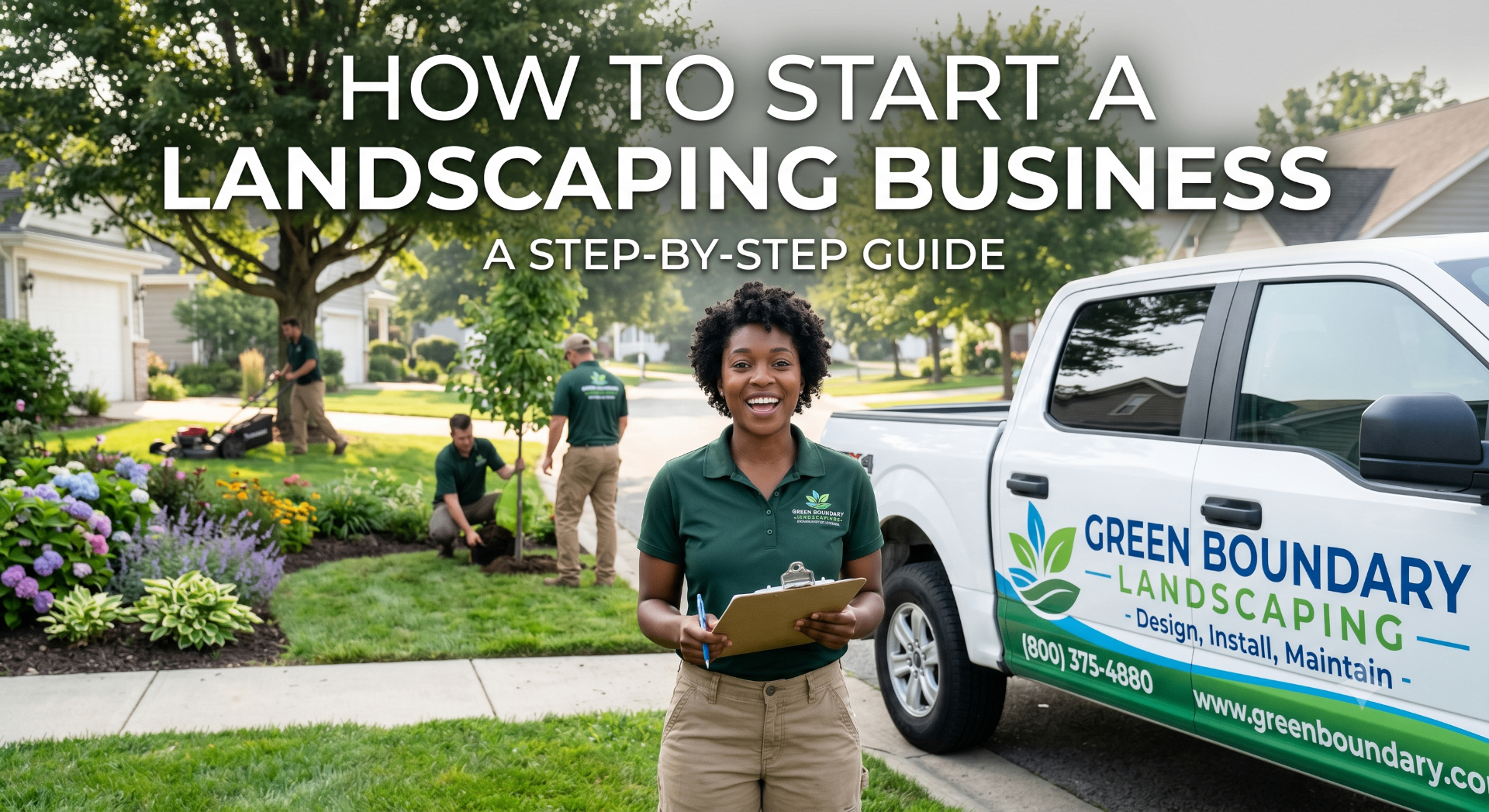
Starting a landscaping business is one of the most accessible ways to build a profitable, hands-on company. Demand is steady, equipment costs are reasonable, and a single hard-working owner-operator can be billing real money within weeks. This guide walks you through the practical steps — from licensing and equipment to pricing and landing your first paying clients — with specific notes for Oregon.
What you'll learn
- Pick your service niche
- Write a simple one-page business plan
- Register your business and get licensed (Oregon LCB)
- Insurance you actually need
- Equipment: what to buy first
- How to price jobs profitably
- Marketing and finding your first 10 clients
- Hiring, scaling and avoiding burnout
1. Choose your service niche
"Landscaping" can mean anything from weekly mowing routes to six-figure hardscape installs. Picking a focused niche upfront makes pricing, equipment, and marketing dramatically easier. The most common starting niches:
- Lawn maintenance — recurring weekly or bi-weekly mowing, edging, blowing. Predictable revenue, low equipment cost.
- Yard cleanup & one-time jobs — leaf removal, brush hauling, gutter cleaning. High margins, easy to upsell.
- Landscape design & installation — plantings, mulching, sod, irrigation. Higher tickets, more skill required.
- Hardscaping — patios, retaining walls, paver driveways. Highest revenue per job, but heavy equipment and a license are required.
If you're starting solo, pick maintenance + cleanup. You'll build a route, generate cash flow, and add installation work as you grow.
2. Write a simple one-page business plan
Skip the 40-page template. On a single sheet, answer:
- Who is my ideal customer? (e.g., homeowners with $40k+ yards in Beaverton)
- What services do I sell and at what price?
- What's my monthly revenue target for year one?
- What does it cost me to deliver each service (fuel, labor, supplies)?
- How will I get my first 20 customers?
3. Register your business and get licensed
In Oregon, the licensing requirement depends on the work you do:
- Mowing, blowing, raking, hedge trimming, leaf removal: generally do not require a state landscape license. You still need to register your business with the Oregon Secretary of State.
- Landscape design, installation, irrigation, paver/patio work, retaining walls, plantings: require a Landscape Contractor License (LCB) from the Oregon Landscape Contractors Board. This involves a passing the LCB exam, carrying a bond ($15,000+) and insurance.
Practical setup checklist:
- Pick a business name and form an LLC via Oregon Secretary of State (≈$100/year).
- Get an EIN from the IRS — free, takes five minutes online.
- Open a separate business checking account.
- If you'll do installation work, study for and pass the LCB exam and post your bond.
- Register for state taxes if you'll have employees.
4. Insurance you actually need
Don't skip this — one accident with a rock and a customer's window can wipe out a year of profit.
- General liability: $1M policy is standard. Budget $500–$1,200/year for a solo operator.
- Commercial auto: personal auto policies do not cover a work truck hauling a trailer.
- Workers' comp: required in Oregon the moment you hire your first employee.
- Inland marine / equipment: covers theft of mowers and trimmers from your trailer.
5. Equipment: what to buy first
The temptation is to buy everything new. Don't. A reliable used setup gets you to revenue faster. A realistic solo starter kit:
- Reliable truck (used 1/2-ton pickup) — $8k–$15k
- Open landscape trailer (5×10 or 6×12) — $1,500–$3,000
- Commercial 21" walk-behind mower + one 36" or 48" stand-on — $1,500–$6,000
- String trimmer, edger, backpack blower (commercial-grade, e.g. Stihl or Echo) — $1,200
- Hand tools: rakes, pruners, loppers, tarps — $300
- Branded magnetic truck signs & polo shirts — $200
Total realistic startup: $12,000–$25,000. Many owner-operators start with $5k and a used truck they already own.
6. How to price jobs profitably
Most new landscapers undercharge and burn out. Two pricing models you should master:
Hourly target rate
Calculate your minimum billable hourly rate:
(Desired annual take-home + overhead + taxes) ÷ realistic billable hours per year
A solo operator in Oregon should target $65–$95/hour of billable work. That doesn't mean you charge the customer hourly — it means every job you quote should yield at least that.
Per-service flat pricing
Customers prefer flat prices. Typical Oregon market rates as of 2026:
- Weekly lawn mow (¼-acre lot): $45–$75
- One-time yard cleanup: $250–$700
- Mulch install: $80–$120 per cubic yard installed
- Sod install: $1.50–$3.00 per sq ft
- Paver patio: $20–$40 per sq ft
7. Marketing and finding your first 10 clients
You don't need a fancy website to get started — you need to be visible where homeowners actually look.
- Google Business Profile — free, takes 30 minutes. The single highest-ROI marketing asset for any local service.
- Door hangers in 3 target neighborhoods — print 1,000 for $80. Expect 1–2% response.
- Get listed in local directories — including Oregon Services Directory's landscaper section.
- Nextdoor & neighborhood Facebook groups — introduce yourself, post before/after photos.
- Ask for reviews relentlessly — text every happy customer the day after the job. Five-star Google reviews beat any paid ad.
Get found by Oregon homeowners
List your landscaping business in our directory and reach customers searching in your service area.
Browse the directory →8. Hiring, scaling and avoiding burnout
The first hire is the hardest. Most operators hire too late, work 70-hour weeks, and stall at $100k revenue. Plan to hire a part-time helper once you're consistently working 35+ billable hours per week.
- Start with a single part-time laborer at $20–$25/hr.
- Move to a 2-person crew once you have 30+ recurring maintenance accounts.
- Track every job's actual hours vs. quoted hours — this is the single most important number in your business.
- Standardize. A truck loaded the same way, a route sheet, a checklist for every job. Boring is profitable.
Final thoughts
A landscaping business rewards consistency, not heroics. Show up when you say you will, charge enough to keep your trucks running, and treat every customer like they could write a five-star review. Do that for 18 months and you'll have a real business — not just a side hustle with a mower in the back of your truck.
Good luck. Oregon's homeowners need you.